
Where Lale Meets Mu‘umu‘u: Women, Memory, and the Soft Power of Cloth
Some mornings, when the light falls just right through my studio window — the one that faces the quiet rise of Mount Kaʻala, the highest peak on Oʻahu — I think of the women who painted before me. Turkish women whose brushes once moved quietly against the weight of empire, tradition, and expectation. Women like Mihri Müşfik, Nazlı Ecevit, and Celile Hikmet — each shaping a language of color and gesture long before the world was ready to witness them.
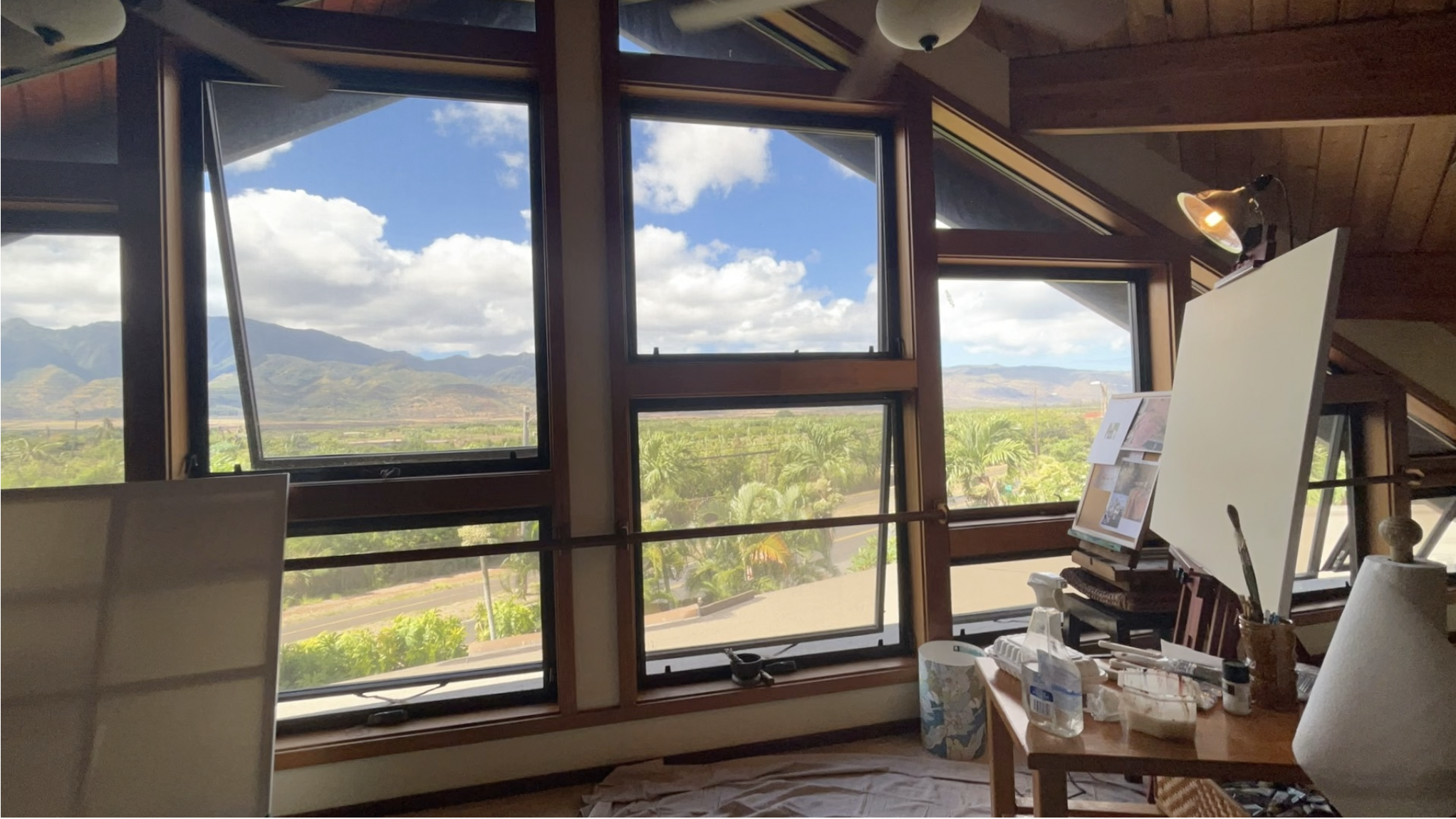
Stuio Kōlea’s Art Studio looking at the mount Ka’ala.
They worked within the world available to them — often through portraiture, quiet interiors, and scenes of daily life, creating spaces where they could express themselves fully.
They painted the quiet of a room, the strength of a gaze, the softness of fabric gathered at the wrist.
Their paintings carried an intimacy that still feels familiar — a closeness between women, light, and the everyday rituals that shape a life.
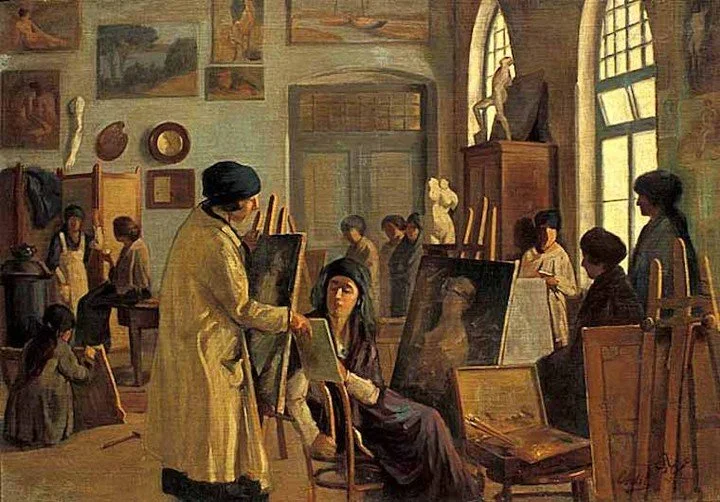
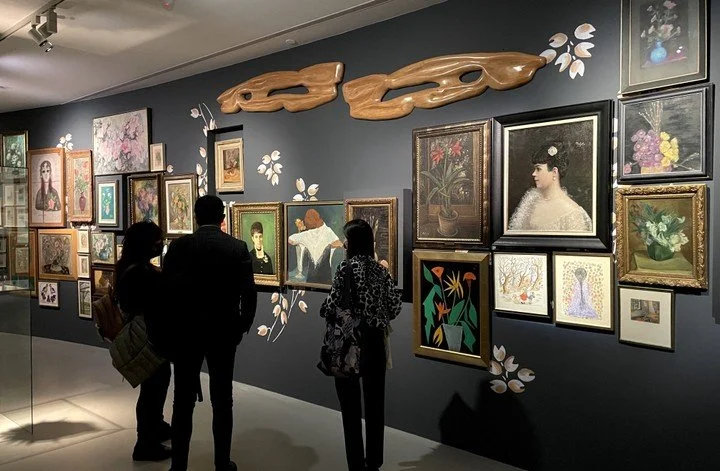
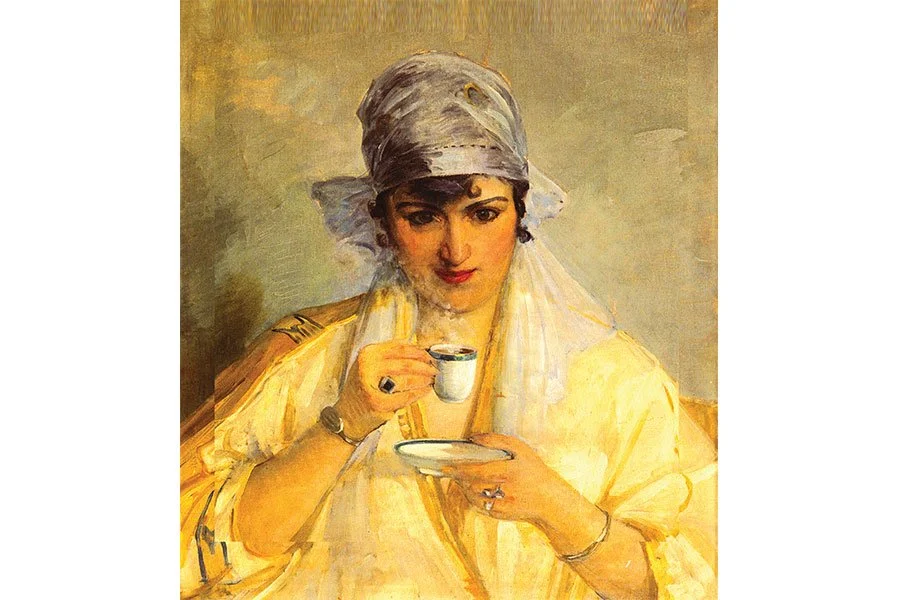
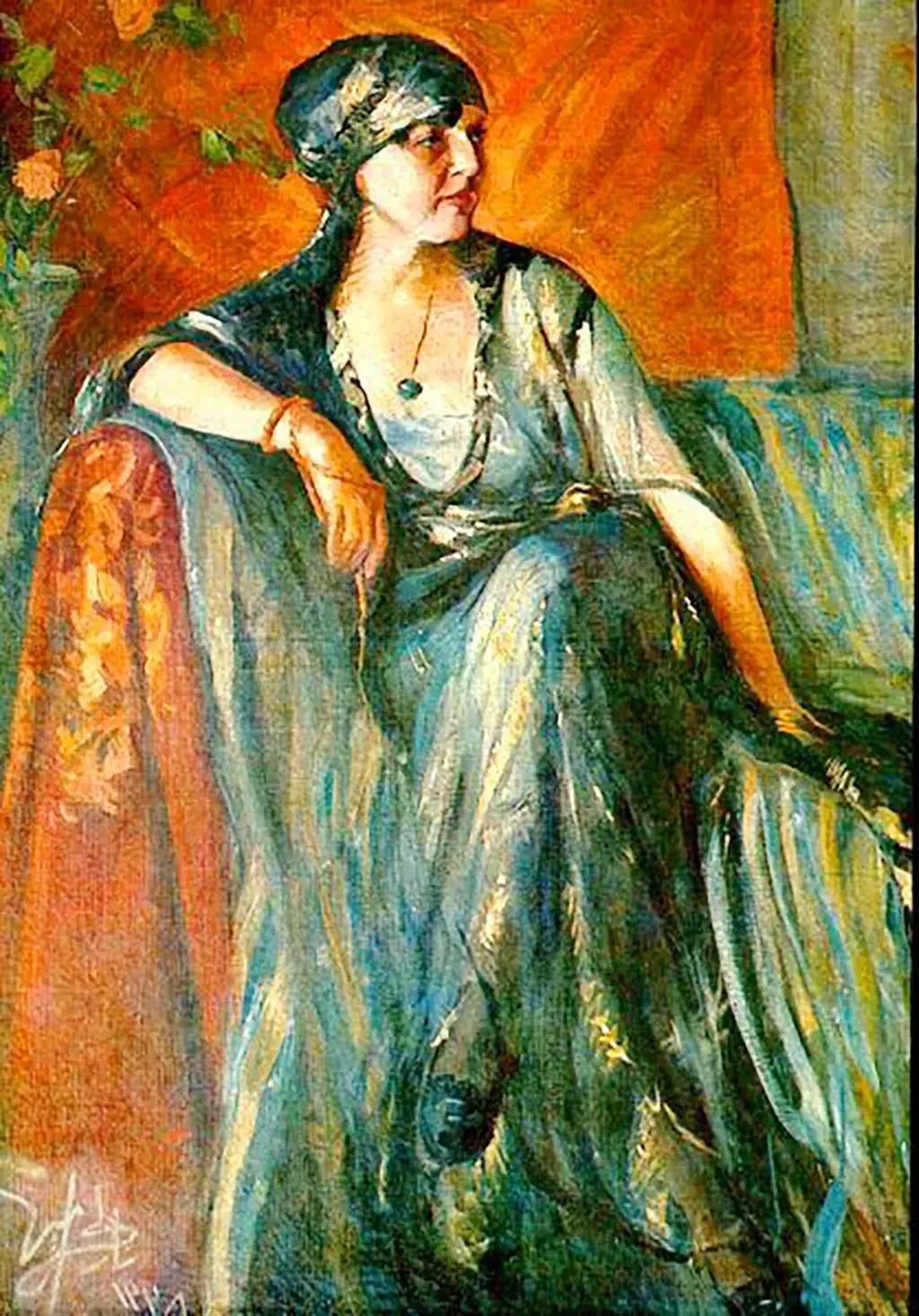
Paintings of Turkish women painters.
Living in Hawai‘i, I feel a certain tenderness whenever I see a mu‘umu‘u — knowing it belongs to this place, to its women, to its histories.
I speak of it only with the care of someone who is a guest here, someone listening and learning.
Its silhouettes, colors, and movement carry meanings rooted in Hawaiian experience, identity, and memory — things I can only admire with respect from the outside.
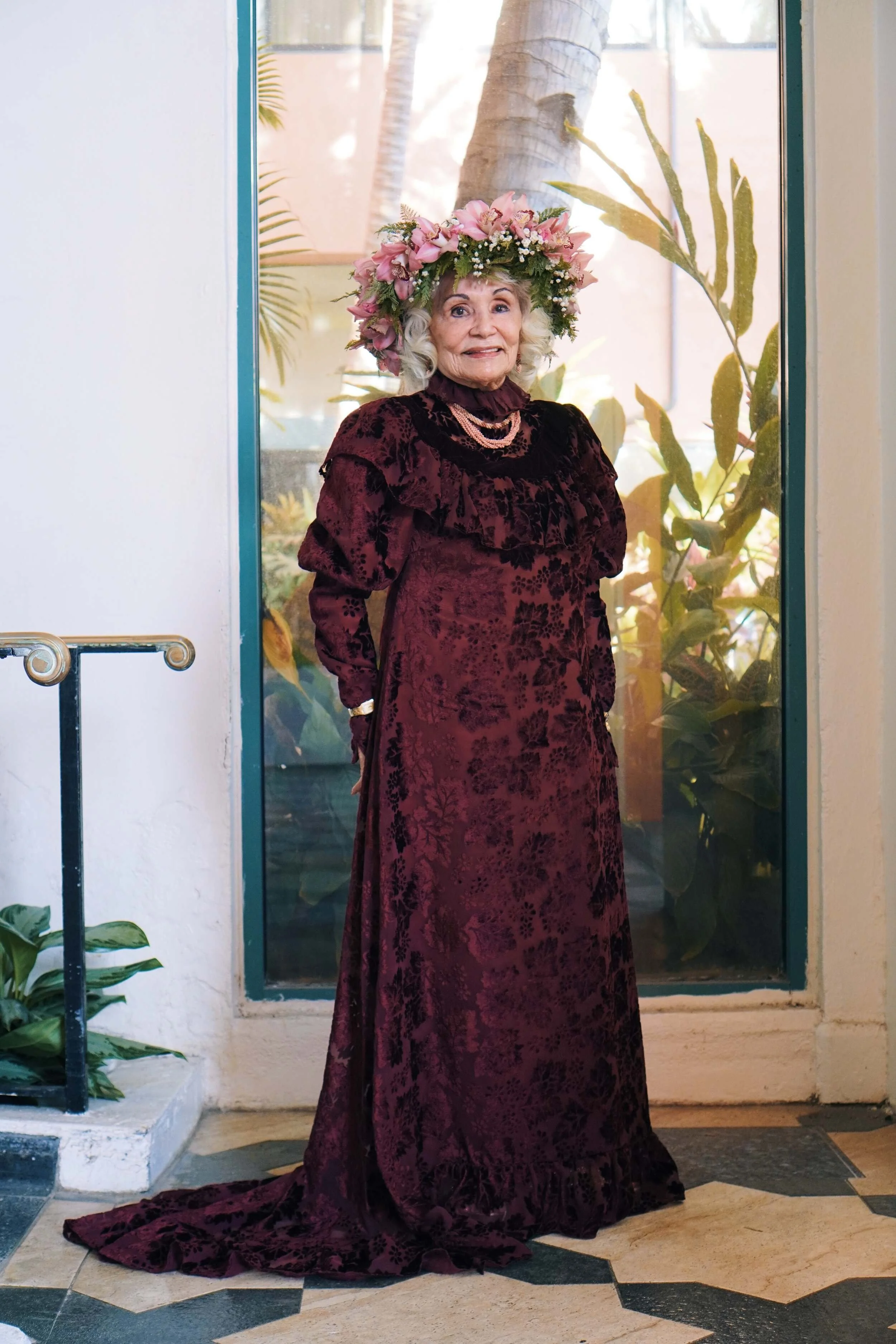
Photography by Ezgi Iraz
The exhibition Fashioning Aloha at the Honolulu Museum of Art helped me understand aloha wear not as something to interpret through my own lens, but as a cultural expression shaped by “the diverse communities of Hawai‘i” and an “intense relationship to place” (Honolulu Museum of Art, Fashioning Aloha).
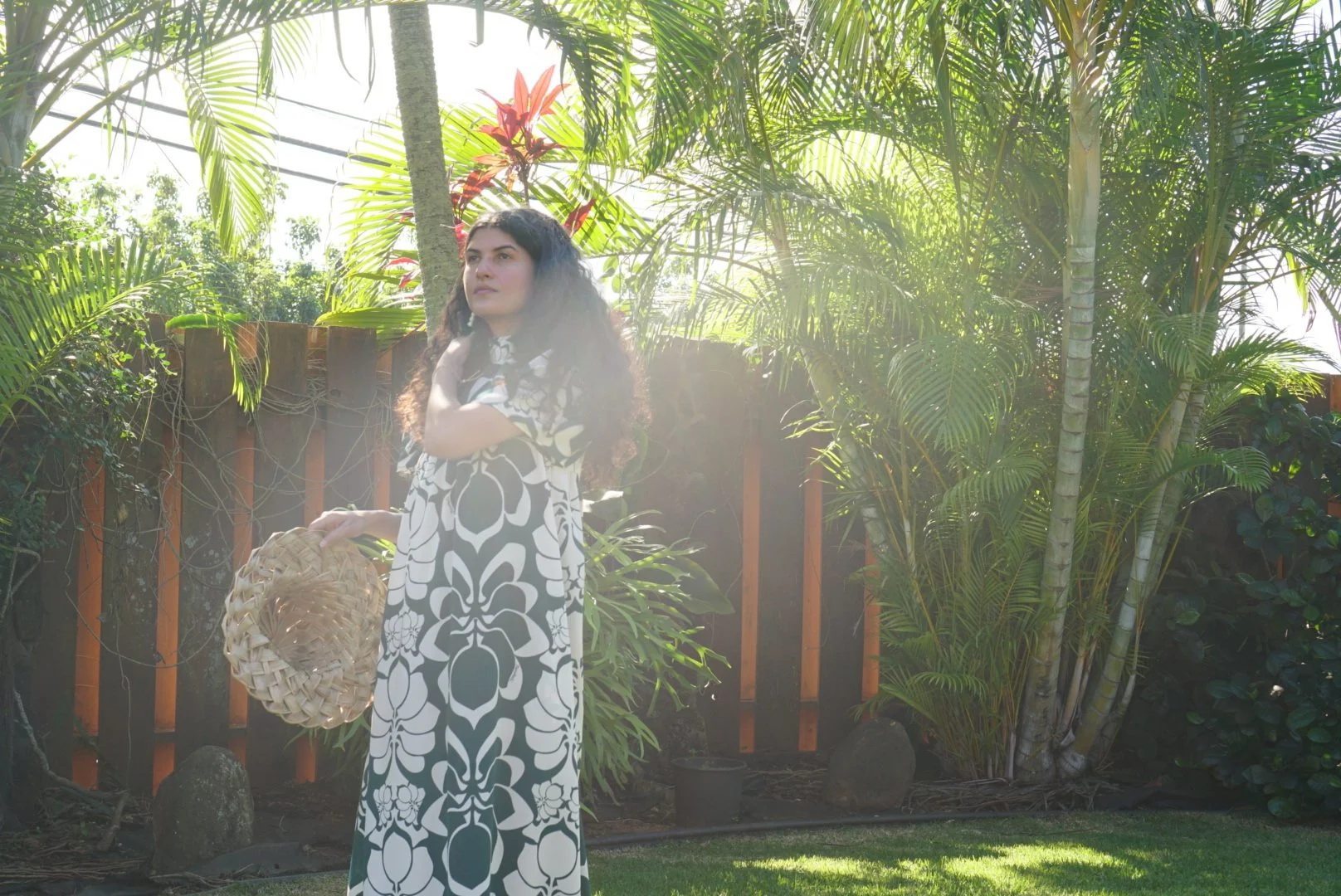
Self Portrait exhibited at Honolulu Museum of Art 2024
And in 2024, I felt deeply honored to have one of my self-portraits selected for the exhibition’s community section — a small thread of my own story held with humility within a lineage of island creativity.
On these beautiful, holy islands of Hawai‘i nei, I hold deep gratitude for the wāhine of the mu‘umu‘u community, who welcomed me with grace and gentleness, accepting me as I am and encouraging my creative path.
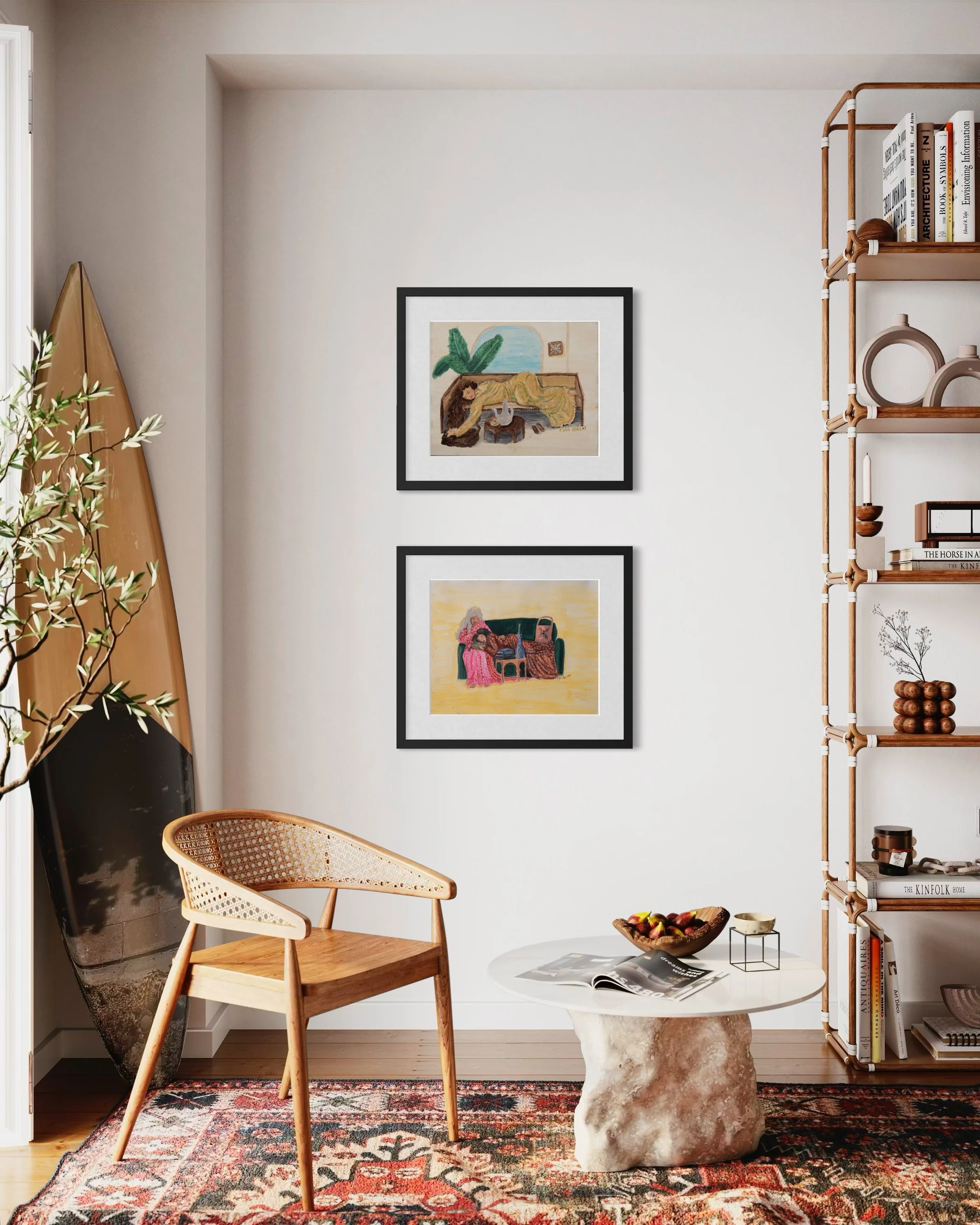
As Kader would have it — as destiny in its quiet way often works —
these two worlds found a place to meet.
The Ottoman portrait studio and the Hawaiian living room,
the lale and the lei, the softness of Turkish interiors and the openness of island air, coming together to form a language I could have never planned, only received.
It is not a language shaped by one person but by the women whose stories, strength, and small freedoms continue to guide us across oceans and generations.
In the studio, in the workshops, in the stillness behind the camera, their presence is always here.
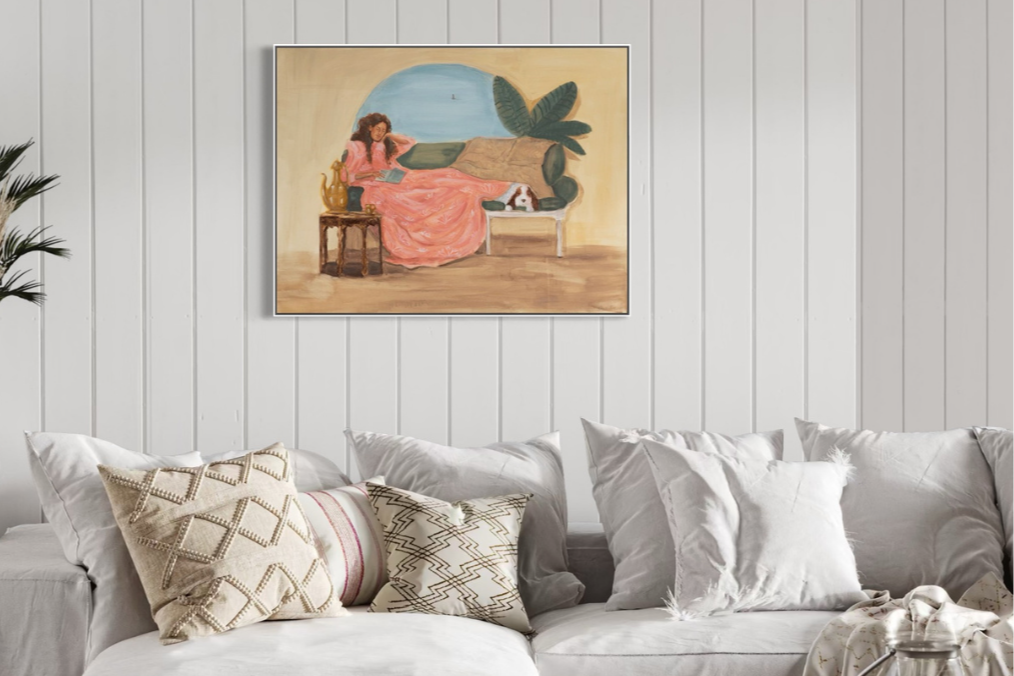
Resting in Mu’umu’u: Pink Dreams by Ezgi Iraz
Wāhine who lived their everyday lives in mu‘umu‘u with memory and meaning, and the Turkish women who painted within the spaces they opened for themselves. Their courage, their artistry, their quiet power are the threads that keep widening the path.
Art, whether held in paper or woven into fabric, has long given women a way to express who they are — a tender freedom carried by those before us and expanded gently by each of us in our own time.
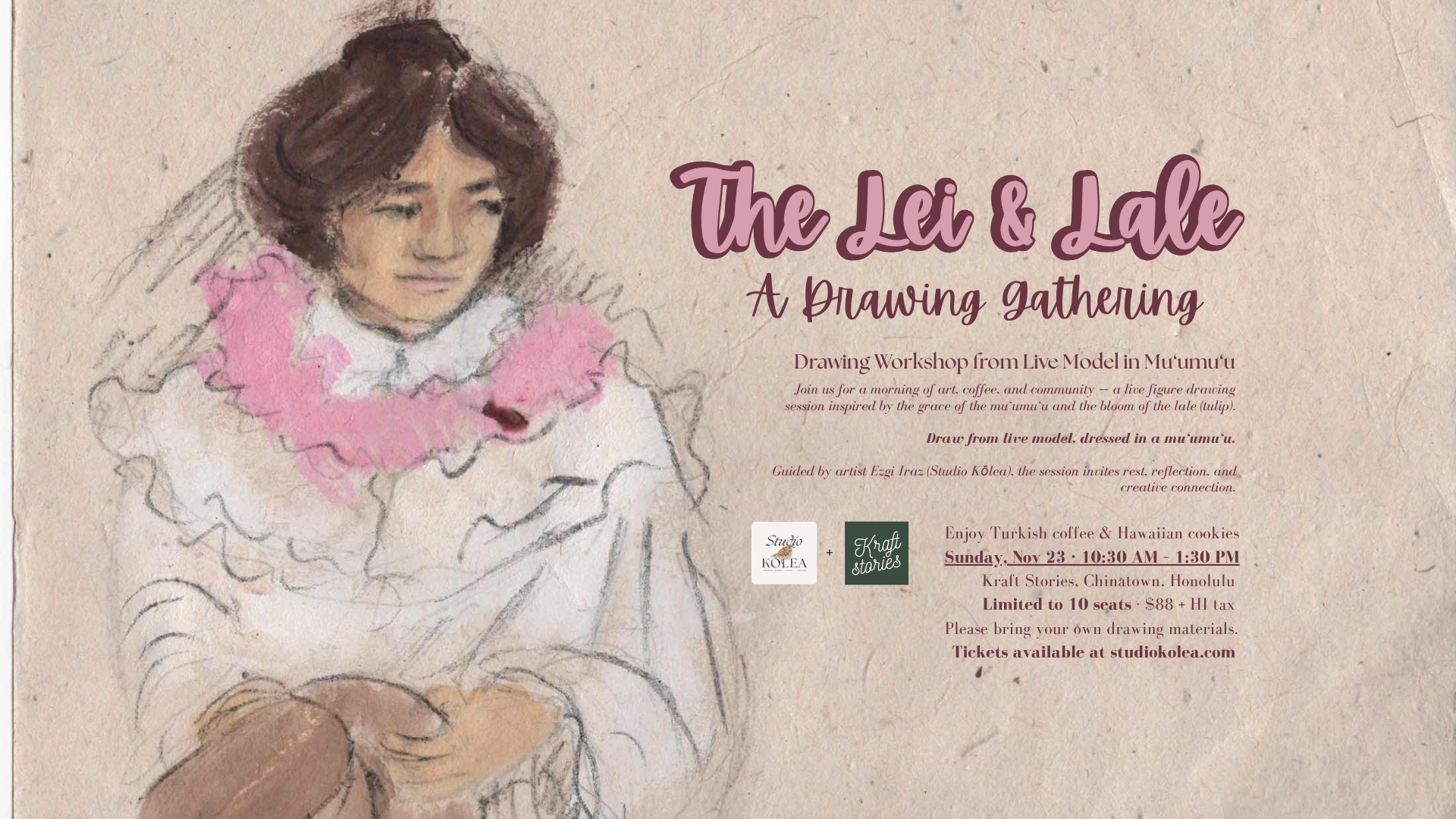
If these threads speak to you,
you are warmly invited to join us for
Lei & Lale — A Drawing Gathering,
a morning where art, story, and culture meet in quiet, inspiring ways.
Sunday, November 23 • 10:30am–1:30pm
Honolulu, Hawai‘i
Tickets and details:
studiokolea.com/events
Lastly, I would like to thank every woman who is brave enough to be fully herself and shine.
Ezgi Iraz